• New Fast Automatic Daffodils (New FADS) – Fishes Eyes
Random Wednesday
“One of Factory’s mid-eighties cult sellers, Kalima. Remember them? Sade two years too early, progressive Latin American jazz from a Hulme squat.”
• Kalima – Smiling Hour
Sample Tuesday
Noémie Wolfs singing
• Pyotr Ilyich Tchaikovsky — Swan Lake, Act 2, Scene 10: Moderato
• Hooverphonic – Mad About You
Too Good Monday
• The Chemical Brothers – The Test
Remix Friday
As they say in Manchester, Liam fucked off.
• Slade – Cum On Feel The Noize
• Quiet Riot Cover
• Oasis Cover
Future Thursday
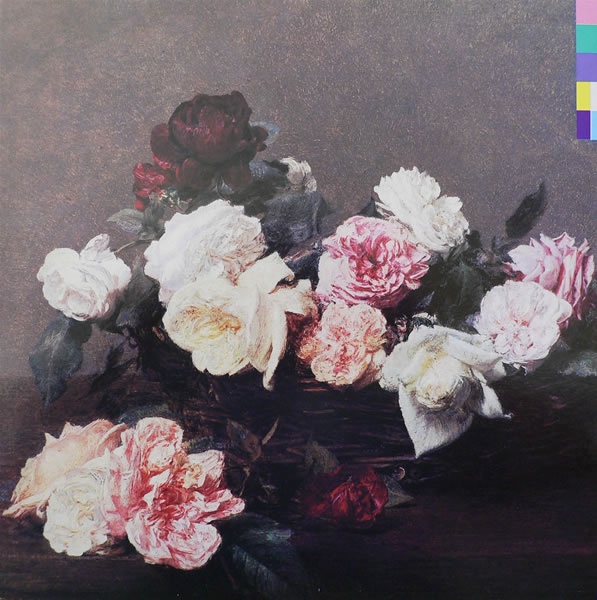
The inception of the album cover (as described by Tony Wilson):
‘I have been asking myself a question and I want the sleeve to answer the question.’
‘What’s the question, Peter?’ asked Hooky, always willing to move the conversation along and show a little more interest.
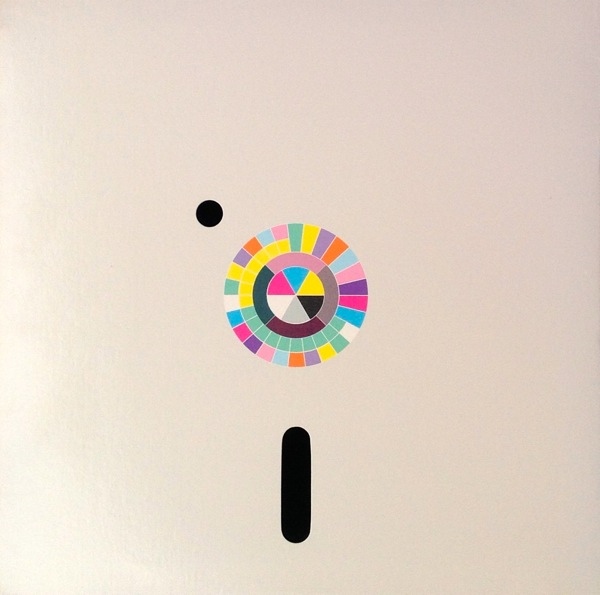
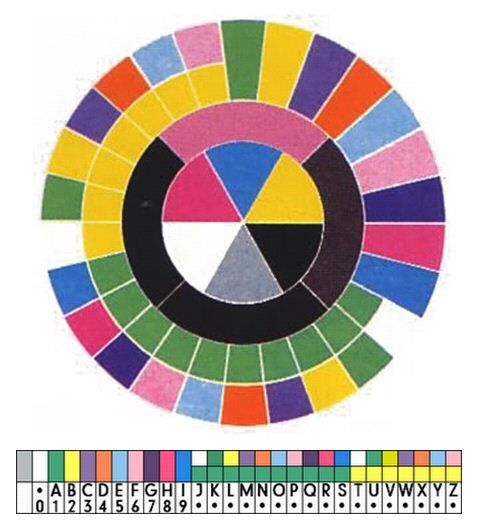
‘How many colours does it take to replace language, to replace the alphabet?’
Most people print colours by the four-colour printing process – that cyan, magenta crap. And Factory did that. But every so often Peter or one of his acolytes – for Peter had been followed by a trail of other ‘great graphic designers on the way up’ – asked for a special colour. Which meant the printers did the four-colour run and then added one, two or more runs for these ‘special colours’. ‘Cause Factory’s designers did not trust the cyans and magentas to get together specifically enough to give them the exact bloody shade that their vision demanded. And since the music was great, then the packaging in which the customer received said art would have to have the same attention to perfection.
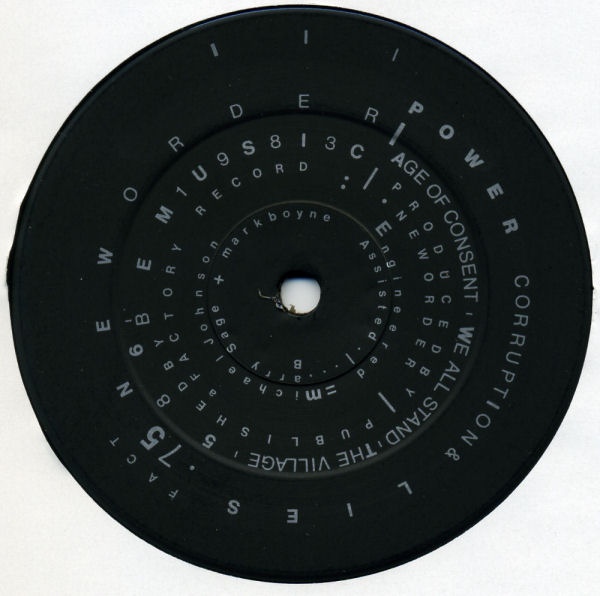
It cost more, to cut it short. And Peter’s intriguing question was bound to cost more. The explanation was almost mundane compared to the preceding analysis of cost, process and attitude. With ten colours representing digits zero to nine, you could make numbers one to twenty-six and reflect a Western European alphabet. So that was that, they’d have this bloody picture of a bunch of flowers and some colour coding instead of lettering. Sounded good. No one complained. No one ever did. Peter was good. That was enough.
• New Order – Blue Monday
More on the art of New Order here:
Random Wednesday
“Twice a year, on New Year’s Eve and the May birthday bash, there was no place on earth like the Hacienda. That’s a fact. Stone cold fact.
Stand-out tune was Lulu’s ‘Shout’ on those party nights, hardly hip but these were the days of the war (against all white New Romantic shite) and we did have rationing.” — Tony Wilson
• Lulu’s — Shout
Sample Tuesday
• E-mu Emulator II sound demos: Loon Garden
• 808 State – Pacific State (Original Extended Version)
• Bootsy Collins – *-Ing The ‘Luv Gun’
“At the time of recording “Pacific State”, 808 State were three heads: Gerald Simpson, Martin Price and myself. Martin brought “The Loon” to the table. I think he heard it on a Bootsy Collins album, What’s Bootsy Doing, which had just come out. I always thought it was an Akai Library disc, Wind Chimes Birds & Streams, but it would seem it is the Emulator II Library.
There is a theory that Akai licensed that library for the S900 series. The sampler we used for Pacific was the Casio FZ 1 and it’s probable that the studio had copies of various sample libraries reformatted for the Casio. Casio had its own similar disc with thunder, rain, ocean, birds and insects. We had recorded over that particular disc thinking we would never use such new age nonsense. Floppies were expensive and not easy to buy, so we re-used them.
I’m not sure which came first, “Pacific State” or “Sueno Latino”. I can honestly say I wasn’t aware of that record until afterwards, but Martin was onto every release because he had the Eastern Bloc record shop. I remember after the event they were often played together by DJs in a mix because they shared the loon. I also remember a couple of bootleg attempts at Pacific coming from Italy. The only thing they had right was the loon, so again, the sample library was common.
The Vinyl Telegraph was fast back then, even without the internet. The record we were most aiming to fit alongside, at least in my head, was “Open Our Eyes” by Marshall Jefferson. It was a massive tune at the Warehouse Parties and Clubs in Manchester. Its mood was tropical and humid, opening up with a full sample library of waterfalls streams and shakuhachi. I remember 808 banned any use of shakuhachi, a Japanese flute that every 1980s keyboard seem to have as a preset. It always struck me as funny that the Canadian loon—a very northern temperate bird—was our jungle mascot.
A typical mix cassette in my bag at that point would have pointed to the fact that bird song and B-movie jungle music was not unusual. Anyone will tell you what an Exotica nut I was back then. Exotica is a kitsch 1950s Hollywood view of third world music; its biggest artist was Martin Denny, whose albums were littered with fake bird calls and insect impersonations by a man called August Colon. Other copyists followed such as Arthur Lyman and Eden Ahbez.
Other electronic bands such as YMO and Throbbing Gristle also referenced Martin Denny in the ’80s. I think Exotica lived on into the 1970s in the fusion genre—artists such as Santana, Weather Report, Herbie Hancock, and Airto Moreira who would use similar vocal and percussion FX, like bird whistles, duck calls and cuica drum, and lush analogue synths for imaginary other worlds. And of course the common use of soprano saxophone, which “Pacific State” features. We would have loved Mati Klarwein to do our album covers. One of the first artists we did a remix for was Jon Hassel, who must have recognized our Fourth-World bent and reached out to connect.
Our pet loon got a second wind when the KLF used the extended ambient ending of “Pacific State” as an element in the Chill Out album. Chill-out and ambient would recycle a lot of 1970s new-age-type music—music we had been familiar with, such as Rainbow Dome Music by Steve Hillage, Steve Reich, Terry Riley, and Tangerine Dream. ECM jazz records, such as Egberto Gismonti’s, were again full of nature sounds. We had all lit a few joss sticks and listened to double albums of echoing flutes in Egyptian burial chambers—well maybe not Gerald, who was at least 10 years younger. But the Venn diagram of our combined record collections met in a lot of places; everything became re-contextualized around the campfire of technology in 1988.” – Graham Massey
Too Good Monday
“Everything, except Joy Division’s music, is merchandising. Merchandising of memory” — Peter Saville
• Joy Division – She’s Lost Control (Live At Something Else Show)
Random Wednesday
• Jerry Reed – Guitar Man
… but they’re dead wrong, I know they are,
’cause I can play this here guitar.
Sample Tuesday
Absolute House classic, sample drops at 2:00 on the Carrie Lucas tune.
• Carrie Lucas – Dance With You
• Armand Van Helden – You Don’t Know Me (feat Duane Harden)
Too Good Monday
• The Chemical Brothers – Out of Control
Remix Friday
• La Roux – In For The Kill
• Skream Let’s Get Ravey Remix
“A proper remix, the kind that nudges the original song into thrilling new territory. Young Croydon dubstep producer Skream removes everything from the perky original bar the vocal, which, in its ominous, bass-heavy new setting, now seems replete with yearning. The sudden outbreak of old school drum’n’bass near the end is terrific too.” — Gareth Grundy
“I never finished, the version that came out was a demo” — Skream
Future Thursday
• Daft Punk – Alive 1997
Random Wednesday
This is arguably the most important music video for my generation. A video about tomato sauce …
• Daft Punk – Revolution 909
Sample Tuesday
• Karen Young – Hot Shot
• Daft Punk – Indo Silver Club
Too Good Monday
This week, we are pleased to introduce two French blokes: Thomas and Guy-Manuel.
• Daft Punk – “Essential Mix” BBC Radio 1 (1997)
Remix Friday
This should be called “Dimitri Is Not Fucking Around With This Funk Remix”
• Eddie Kendricks – He’s A Friend
• Dimitri From Paris Super Disco Blend
Future Thursday
• Cultural Vibe – Ma Foom Bey
Random Wednesday
• Utah Jazz – Survival Of The Fittest
 Massive Tunes