• X-Press 2 – Give It (feat. Kurt Wagner)
FutureThursday_100+
Future Thursday
I remember how dark everything was in 2003: George Bush threatening World War 3 and MTV doing half reality shows and half rubbish that I couldn’t, in good conscience, call music … But for some reason, one night only, Kraftwerk came back—about 20 years after Computer World—and they played on MTV. (Big ups to Kylie Minogue for giving them a great introduction too.)
• Kraftwerk – Aerodynamik
Future Thursday
• Charanjit Singh – Raag Bairagi, Live at HIT95FM (featuring Johanz Westerman)
Future Thursday
“EDM is not a real thing. EDM is evil and was dreamt-up by Katy Perry when she was masturbating one Tuesday afternoon.” — Beardyman
This is House
• The System - You’re In My System (Kerri Chandler Remix)
Future Thursday
• Orbital – Oi!
Future Thursday
“The music industry may be a crawling hive of hucksters, hipsters and whores. But it has one central glory. One crowning fact. The song. It is about the song and in the end only the song. And great songs cannot be stopped. Cannot be denied … The song. The fucking song. A great song will rise up just because it’s a great fucking song. In a world of hype there is, in the end, only honesty.” — Tony Wilson
• Purple Disco Machine – Devil in Me (Feat. Joe Killington & Duane Harden)
Future Thursday
Willkommen in die Schwarze Zone
• LDC – Die Schwarze Zone
Future Thursday
Ain’t no party like a So Solid party, and the So Solid party is here …
• So Solid Crew & Ms Dynamite – Envy
Future Thursday
“The strange worlds created by Chris Cunningham in his work stem partly from his early career, which included drawing Judge Dredd for the 2000AD comic and doing animatronics for Ridley Scott on the Alien films. So it’s unsurprising that his imagination has generated a world of the digital grotesque. And for this reason, the pleasure of watching Windowlicker doesn’t depend on knowing the forms that he is apparently parodying. It only works precisely because it is neither pastiche nor parody. With Windowlicker, Cunningham has created something new and original in itself. As he remarks himself, any casual viewer of the video will be quickly disabused of the thought that it is an R’n’B video.
As Aphex Twin himself won’t appear in the videos, Cunningham makes a virtue of this by putting his face on almost everyone. And the Aphex Twin videos take their cues as much from the music as from anything else. The gross visual metamorphoses in Come To Daddy and Windowlicker have their impetus in the Aphex Twin’s digitally dissolving sounds. The only truly scary thing about the video is the reaction to it. Like the fools in Windowlicker who spend too much time talking, we live in a culture of oversignification, where anything becomes a sign of something else, of something we already know. And the consequence is that we don’t recognise and miss the excitement of the truly new.” — John O’Reilly
• Aphex Twin – Windowlicker
https://www.theguardian.com/friday_review/story/0,,313437,00.html
Future Thursday
• Los Tres – Un Amor Violento
Future Thursday
“And that guitarist, what do they call him, Moose, the most useless guitarist I’ve ever met, had absolutely no idea what he was doing …
Which is particularly interesting, since what he is actually doing is the most wonderful, bizarre and creative guitar playing that I’ve heard for fifteen years.” — Vini Reilly
• Happy Mondays – God’s Cop
Future Thursday
“… that place was real life; that place was the clearing in the undergrowth where meaning and elucidation live, that place was the place where music came from and the place it would take you back to.” — Tony Wilson
• Royal Albert Hall: Skream & Crazy D (Dubstep Set)
Future Thursday
So many questions have been raised about this new dance craze called “Acid”.
What people really want to know is how the story all goes about Acid.
This is Acid.
Gonna give you Acid.
Acid is the latest sound, can you feel it all around as you dance?
Acid has a certain groove that makes your body want to move when you hear it.
When the Acid hits your soul, it makes you lose control of your body.
Acid sounds so unique you just have to move your feet when you hear it.
This is Acid.
I’m giving you Acid.
• Maurice – This is Acid
Future Thursday
This is a “pop” band playing a pop song. Looks like a funk band jamming … The future of pop.
• KC & The Sunshine Band – Get Down Tonight (Live)
Future Thursday
This track is from 1981, before the Hacienda, before the explosion of the rave scene (the summer of love didn’t happen until 1988).
“This was forty years before Flesh night at the Hacienda and a gay genius was hardly the hot item in Manchester at that point. Alan [Turing] was an outsider in the world of Manchester’s successful computer department.
But at least he was able to play with the machine that only he had had the vision to imagine.
He sent out detailed workings to all his friends about the ‘Baby’ – for so, delightfully, was it named – and the baby’s babies, the follow-up machines. He suggested to his chums that anyone caring to write a ‘program’ for the Manchester machine should do so and come up and try it out. One friend, the head of maths at Harrow, a big-time public school famous for being near where Elton John was born, wrote back and said he had a program.
‘Come on up.’
Mr Strachey arrived on the train from Euston, as do most things that come to Manchester.
He spent the morning typing his program into a punch-card, for this indeed was the input method of 1950. All bloody morning.
And then the engineers, scientists, mathematicians and hangers-on stood back, and waited. Mr Strachey let his friend Alan insert the card.
‘Deeeerrrrrr, deeerrrrr, der der derrr derrrrrrrrrrrr,’ sang the computer.
God Save the bloody Queen. More shocking than the Pistols’ jubilee work-out. ‘Cause this was thirty cubic feet of valves and tubes and metal. And it was playing music. Kraftwerk, in what room or womb were you that lunchtime? The dawn of electronica was that moment.
Later that day, the machine gave a startling rendition of Glen Miller’s ‘In the Mood’, for it was that stage in the evolution of the popular song. And thirty odd years later, New Order were trying to make what had been dubbed in 1950 ‘the electronic brain’ do even more with music …
Tell me you can’t hear it. Tell me you can’t hear the world changing and the world arriving.” — Tony Wilson
• New Order – Everything’s Gone Green
Future Thursday
• New Fast Automatic Daffodils (New FADS) – Fishes Eyes
Future Thursday
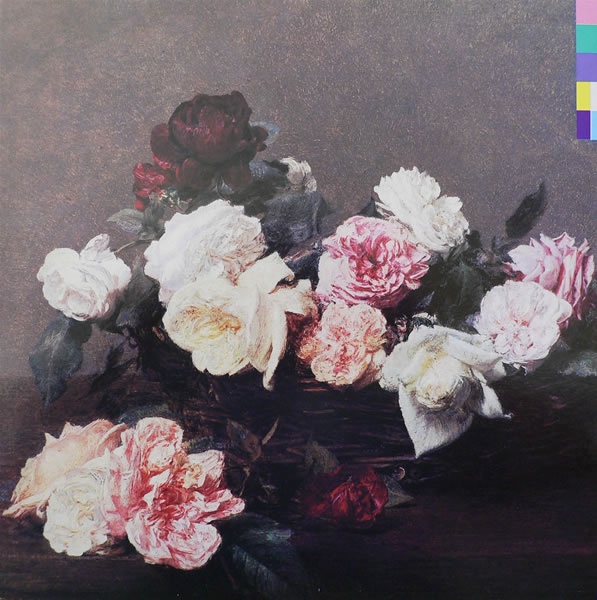
The inception of the album cover (as described by Tony Wilson):
‘I have been asking myself a question and I want the sleeve to answer the question.’
‘What’s the question, Peter?’ asked Hooky, always willing to move the conversation along and show a little more interest.
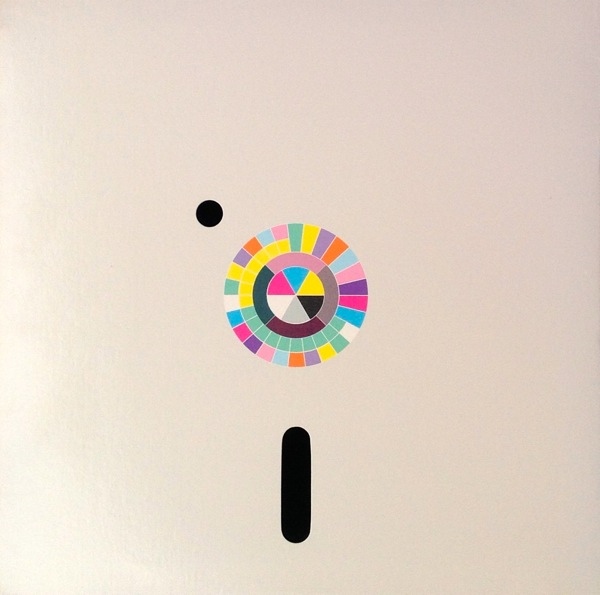
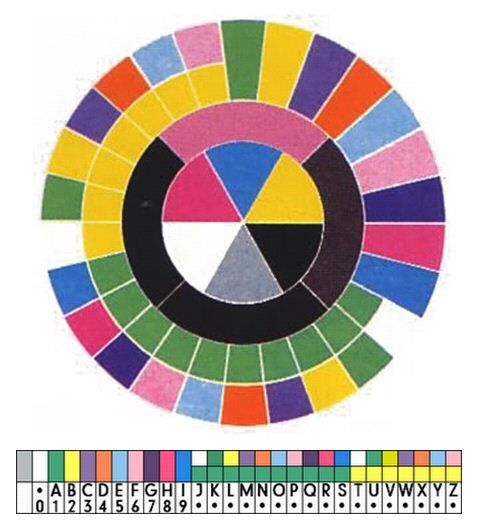
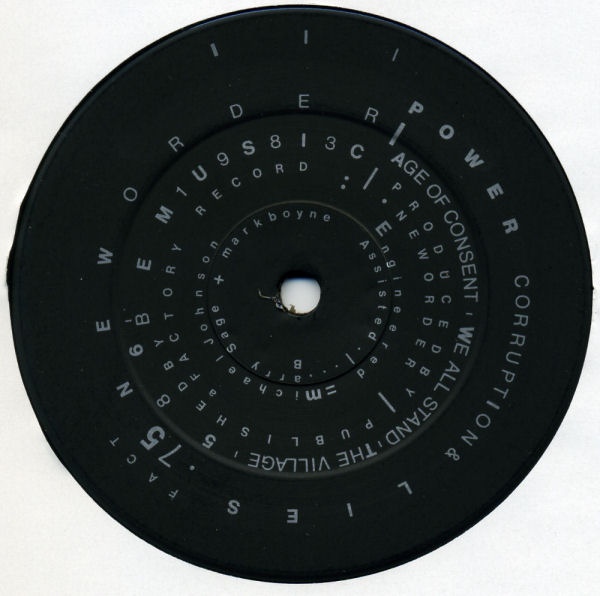
‘How many colours does it take to replace language, to replace the alphabet?’
Most people print colours by the four-colour printing process – that cyan, magenta crap. And Factory did that. But every so often Peter or one of his acolytes – for Peter had been followed by a trail of other ‘great graphic designers on the way up’ – asked for a special colour. Which meant the printers did the four-colour run and then added one, two or more runs for these ‘special colours’. ‘Cause Factory’s designers did not trust the cyans and magentas to get together specifically enough to give them the exact bloody shade that their vision demanded. And since the music was great, then the packaging in which the customer received said art would have to have the same attention to perfection.
It cost more, to cut it short. And Peter’s intriguing question was bound to cost more. The explanation was almost mundane compared to the preceding analysis of cost, process and attitude. With ten colours representing digits zero to nine, you could make numbers one to twenty-six and reflect a Western European alphabet. So that was that, they’d have this bloody picture of a bunch of flowers and some colour coding instead of lettering. Sounded good. No one complained. No one ever did. Peter was good. That was enough.
• New Order – Blue Monday
More on the art of New Order here:
 Massive Tunes